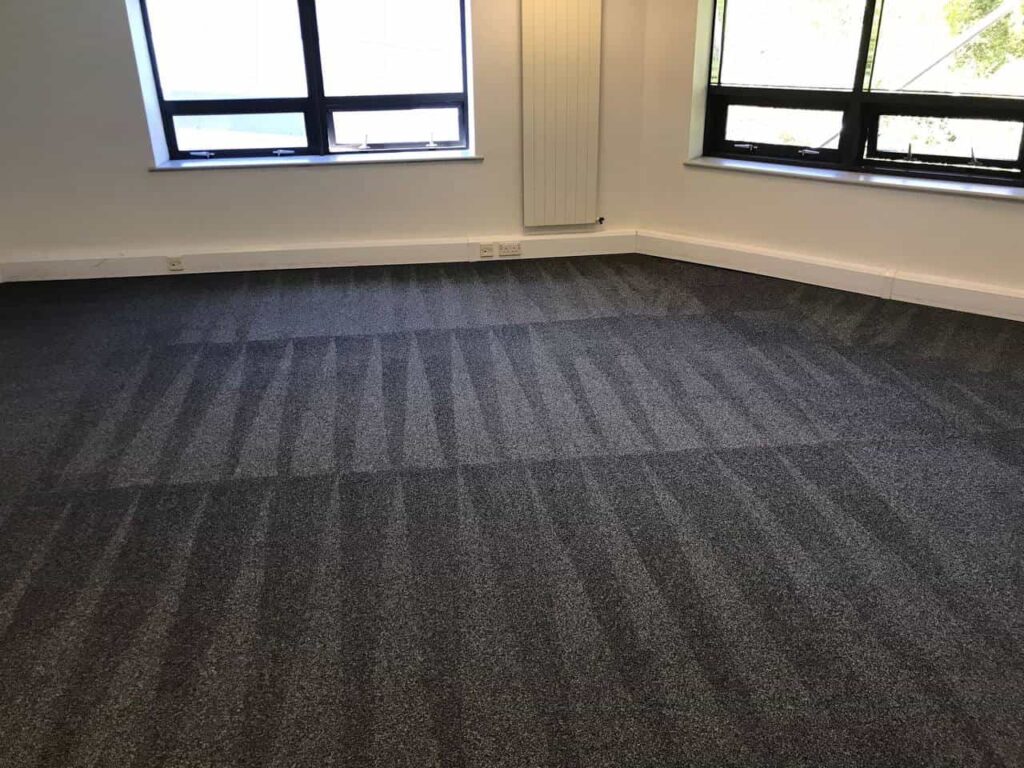
Regular vacuuming is essential for removing loose surface debris, but it cannot extract everything that settles deeper within carpet fibres. Fine soil, tracked-in dirt, spills and residues can gradually build up even when a carpet is cleaned routinely.
Because this change happens slowly, homeowners often become accustomed to the carpet’s appearance. Recognising the early signs that a deeper clean is needed can help restore freshness before the fibres become heavily soiled.
Signs Your Carpets Are Ready for Professional Cleaning
There is no single cleaning schedule that suits every household. The appropriate timing depends on foot traffic, the carpet type, whether pets live in the property and how individual rooms are used.
For homes in Challock, Kent, the following signs provide a more useful guide than relying on a fixed interval alone.
High-Traffic Areas Have Become Noticeably Darker
Hallways, stairs, doorways and routes between frequently used rooms usually show soiling first. Repeated foot traffic carries fine particles into the carpet and pushes them further between the fibres.
These areas may look darker or duller than the carpet beneath furniture and around the edges of the room. If vacuuming no longer improves the appearance, professional cleaning can loosen and extract more deeply embedded soil.
The Carpet No Longer Looks Fresh After Vacuuming
A freshly vacuumed carpet should generally appear lifted and orderly. If it still looks grey, flat or uneven, soil may have accumulated beyond the reach of ordinary household equipment.
Vacuuming remains important, but suction alone may not release oily residues and compacted particles attached to the fibres. A suitable professional process combines cleaning solutions, controlled agitation where appropriate and effective extraction.
Spills and Marks Are Building Up
Individual spots may seem minor, but several stains across a room can make the entire carpet appear neglected. Drinks, food, mud and other household spills can leave both visible marks and residues that attract further dirt.
Professional stain treatment considers the substance involved and the carpet fibre before cleaning begins. Prompt treatment generally provides the best opportunity for improvement, although no responsible cleaner should claim that every stain can always be removed completely.
Previously Treated Stains Keep Returning
A mark that reappears after cleaning may indicate that residue remains within the carpet or that moisture reached the backing beneath it. As the area dries, material can travel back towards the surface, making the stain visible again.
Repeatedly adding household products can leave further residue and make later treatment more difficult. A professional cleaner can assess the affected area, choose an appropriate method and rinse out removable contamination more thoroughly.
The Carpet Has Developed a Persistent Odour
Carpets can absorb odours from everyday living, pets, cooking, damp footwear and spills. Air fresheners may disguise the smell temporarily but do not remove the material causing it.
If an odour remains after vacuuming and ventilation, the carpet may need deeper cleaning. The source should be identified wherever possible, as contamination within the underlay or another underlying material may require attention beyond surface cleaning.
The Carpet Feels Sticky or Stiff
Excess cleaning product can remain in a carpet when spills are treated with strong solutions or when an area is not rinsed effectively. This residue may make fibres feel sticky, stiff or rough and can cause dirt to return quickly.
Professional rinsing and extraction may help remove suitable residues. The cleaner should first assess the carpet to avoid combining incompatible treatments.
Pets Regularly Use the Carpeted Areas
Homes with pets often require more frequent carpet care because hair, outdoor soil and occasional accidents can become trapped between fibres. Vacuuming collects much of the loose hair, but it may not remove all residues or odours.
Professional cleaning can target heavily used areas and treat specific contamination with products suited to the carpet. Clear information about the location and cause of any marks helps the cleaner prepare the correct approach.
The Rooms Have Seen Unusually Heavy Use
Family gatherings, home working, children playing indoors or prolonged periods of wet weather can all increase the amount of soil entering carpeted rooms. Even a normally quiet household may experience temporary periods of much heavier foot traffic.
If the carpet looks noticeably different afterwards, arranging a thorough clean can restore a more consistent appearance and remove dirt before it becomes further compacted.
Decorating or Building Work Has Recently Finished
Dust from decorating and property improvements can travel beyond the immediate work area. Fine particles may settle deeply into carpets despite protective coverings and repeated vacuuming.
Once the work is complete and the airborne dust has settled, professional cleaning can help remove remaining debris and refresh the affected rooms. Any paint, adhesive or specialist substance should be identified before treatment begins.
The Carpet Pile Is Becoming Matted
Compacted carpet fibres can result from both soiling and physical wear. Professional cleaning may lift fibres that are held down by sticky residues and embedded dirt, improving the carpet’s overall texture.
However, cleaning cannot reverse permanent wear, fibre distortion or damage to the backing. A professional assessment should distinguish removable soiling from changes that are part of the carpet’s condition.
You Are Preparing the Home for an Important Occasion
A planned clean can be useful before welcoming guests or refreshing several rooms. Arranging the service with enough time for treatment and drying avoids last-minute inconvenience.
Professional cleaning can improve the consistency of the carpet’s appearance, particularly when complete rooms are cleaned instead of treating visible traffic lanes alone.
What a Professional Carpet Clean Should Involve
A reliable service should begin with an inspection of the carpet fibres, construction, condition and staining. This allows the cleaning method and products to be selected appropriately.
The process may include:
- Thorough dry soil removal
- Pre-treatment of heavily soiled areas
- Individual stain assessment
- Controlled cleaning and extraction
- Attention to traffic lanes and edges
- Appropriate rinsing
- Advice on ventilation and drying
The exact method should be matched to the carpet rather than applying the same treatment to every material.
How Often Should Home Carpets Be Cleaned?
Cleaning frequency should reflect use and visible condition. A busy hallway may need attention sooner than a lightly used bedroom, so cleaning every room at the same interval is not always necessary.
Regular vacuuming, quick attention to spills and occasional professional assessment can help determine when deeper cleaning is worthwhile. The best time is usually before the carpet becomes severely soiled rather than waiting until its appearance has changed dramatically.
Conclusion
It may be time for professional carpet cleaning when traffic lanes remain dark after vacuuming, stains are accumulating, odours persist or the fibres feel dull and compacted. A thorough clean can remove deeply held soil and improve freshness, although it cannot repair permanent wear or fibre damage.
K&S Carpet Cleaning Challock provides professional carpet cleaning for homes in Challock, Kent. If your carpets no longer respond to routine vacuuming, contact the team to arrange an assessment and suitable deep clean.
Call us on: 01233 542 595
Click here to find out more about K&S Carpet Cleaning Challock
Click here to complete our contact form and see how we can help with your carpet needs.